
Fruit Juice Farm
M8Games!Simulation
4.498.00 Reviews
- Version
- 1.1.4
- Installs
- 100.00K
- Age Rating
- Everyone
Screenshots
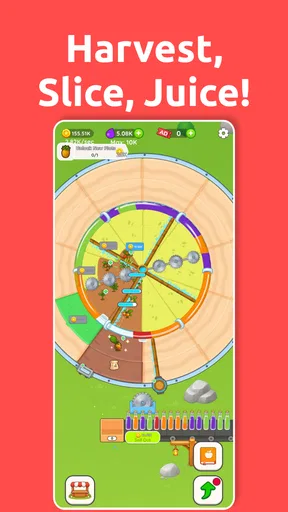
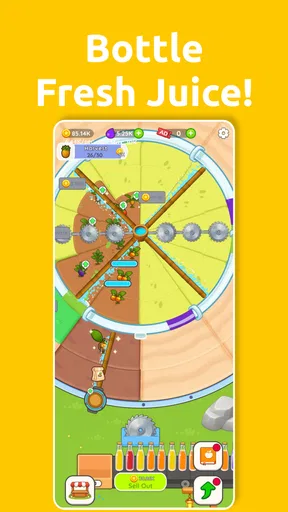
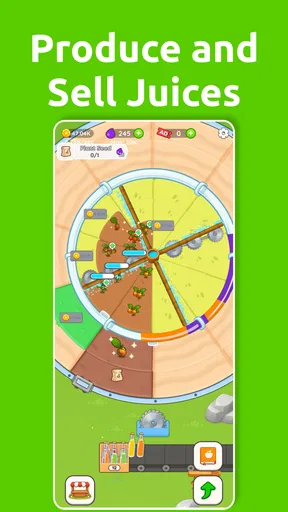
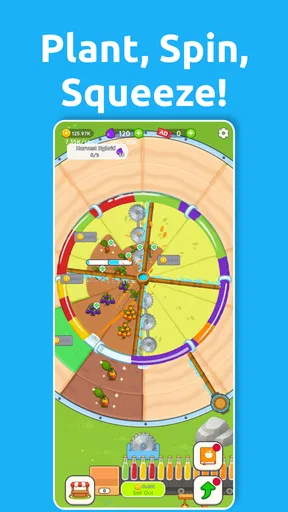
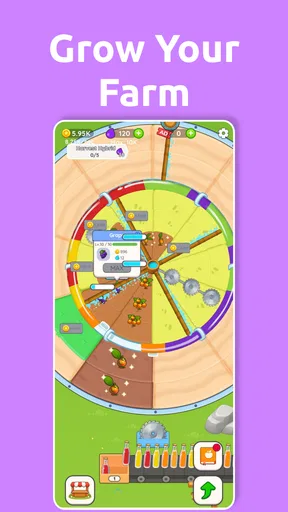
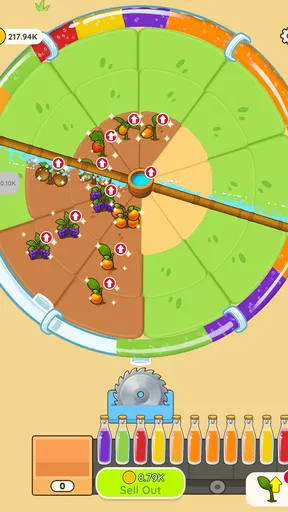
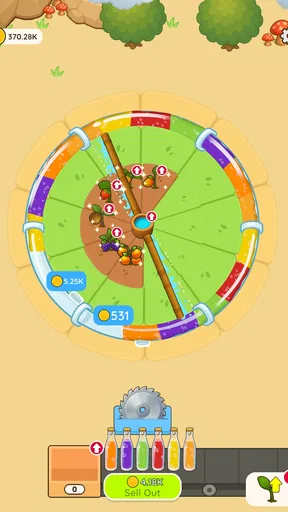
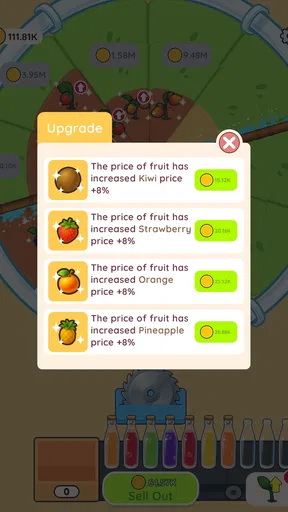
Our Review of Fruit Juice Farm
 Analysis by Appyee
I spent time with Fruit Juice Farm as a light simulation game built around a simple loop: grow fruit, slice it, turn it into drinks, and sell the results. That idea is easy to understand within moments, but the appeal comes from deciding what to do next rather than merely tapping through a checklist. It feels aimed at players who enjoy gradual progress, short sessions, and a cheerful farm-business setting without needing a complicated tutorial.
The game is free to start, carries an Everyone age rating, and comes from M8Games!. Its current version is 1.1.4, and it runs on devices using Android 8.1 or later. The public response is encouraging, with a 4.3 average from around 3.6 thousand ratings and more than 100 thousand installs. Those figures suggest that the concept has found a comfortable audience, although they do not change the most important question: whether its pace and management style suit you.
How the fruit-to-drink loop feels in everyday play
What I like most is that the central routine is immediately readable. You are not asked to learn a dense production chain before seeing a result. The farm supplies the raw material, slicing gives that material a purpose, and selling creates the sense of forward movement. Each step supports the next, so even a short visit can feel productive.
I found this especially convenient during small gaps in the day. A few minutes while waiting for an appointment, taking a break from work, or winding down before bed is enough to check the farm and make progress. This is not the sort of simulation I would choose when I want deep planning for an hour-long session. It works better as a compact habit that I can return to repeatedly.
The drink-making theme also gives the game a warmer personality than a plain crop-growing simulator. Harvesting alone can become abstract, while turning fruit into something ready to sell gives each action a visible purpose. The result is a friendly management fantasy: I am not just collecting resources, I am trying to keep a small juice operation moving.
The most useful mindset is to treat every action as part of a chain rather than as an isolated reward. If I rush to sell everything immediately, I may gain quick progress but lose the satisfaction of preparing the next round efficiently. If I hold everything forever, the farm stops feeling active. The enjoyable middle ground is making enough drinks to keep the cycle flowing while leaving room to react to what becomes available next.
Who will get the most from it
This is a good match for players who like approachable simulation games with a clear theme. It should appeal to someone who enjoys watching a small operation grow, prefers uncomplicated controls, and likes progress that arrives in manageable steps. Younger players can understand the premise easily, while adults may appreciate it as a low-pressure way to fill spare moments.
I would also recommend it to people who find large farming games overwhelming. Many alternatives combine crops, buildings, characters, quests, decoration, schedules, and several currencies. Fruit Juice Farm narrows the fantasy to a more focused activity. That narrower scope can feel refreshing when I want the satisfaction of production without maintaining an entire virtual town.
On the other hand, I would skip it if your ideal simulation depends on detailed economics, realistic agriculture, or extensive customization. The fruit-and-drink premise is the star, not a broad farming sandbox. Players who want complex supply forecasting or a long list of interconnected systems may find the experience too streamlined.
A practical routine for making progress
My preferred routine is to begin by checking what is ready to harvest, then deciding whether the immediate priority is processing or selling. I try not to perform actions automatically just because they are available. A quick look at the whole chain helps prevent the common mistake of creating a bottleneck: having plenty of fruit but not enough prepared drinks, or generating drinks without a sensible reason to delay the sale.
For a short session, I would focus on finishing one clear cycle instead of touching every available activity. Harvest what can be used, process it, and sell when the result is ready. This gives the session a natural endpoint and makes the game easier to fit around real life. For a longer session, I would use the extra time to compare immediate income with the value of preparing the next batch.
That small decision is one of the better strategic details in the experience. Selling quickly feels satisfying, but waiting can make sense when the next step is close. The game does not need a complicated spreadsheet to create this choice. The tension comes from balancing visible progress now against a smoother operation later.
How it compares with other simulation choices
Compared with a traditional farming simulator, this game feels more concentrated. A broader farming title may offer more land management and more long-term projects, but it can also demand more attention before the reward becomes clear. Here, the route from fruit to drink is easier to follow, so the game is more welcoming for casual play.
Compared with an idle business game, it has a more hands-on identity. The theme gives the actions context instead of reducing the experience to watching numbers rise. Still, it does not appear designed for players who want a highly detailed tycoon model. If your enjoyment comes from optimizing staff, pricing, transport, or complex market behavior, a dedicated business simulator would probably be a better choice.
It also sits apart from decoration-first farm games. The juice operation gives the experience a practical focus, while the emphasis on harvesting, slicing, and selling keeps the loop moving. I would choose this one when I want production to matter more than building an elaborate visual showcase.
What the current version means for players
The current release is version 1.1.4, which places the game beyond its earliest launch state. The game was released on December 9, 2025, so the present build represents a relatively early stage in its life rather than a long-established simulation with years of accumulated systems. That matters when setting expectations: I can judge the loop that exists now, but I would not assume that the game has already reached the breadth of older farming franchises.
For someone installing it today, the practical benefit of using the current version is simple: the experience reflects the developer’s present iteration rather than the first release. I would keep the game updated when possible, especially because small simulation games often depend on adjustments to pacing and usability. It is sensible to evaluate the current build on its own terms instead of relying on impressions from an earlier launch period.
Existing users should notice the importance of continuity more than dramatic reinvention. A version number such as 1.1.4 signals ongoing refinement, but it does not by itself promise a particular new feature or a major redesign. I would therefore approach updates with measured expectations: install them for the latest available experience, while judging the game by the fruit-to-drink loop that defines it.
The developer, M8Games!, has chosen a concept that can grow in several directions without losing its identity. More depth could come from expanding the farm-business relationship, but the current appeal depends on keeping the route understandable. An update that adds complexity would only help if it preserves the quick sense of cause and effect that makes the game approachable.
Where the experience still asks for patience
The biggest limitation is also part of the game’s character: the loop is focused. If I play for too long without a break, the repetition becomes more noticeable. Harvesting, slicing, and selling are satisfying when I return with a small goal, but the same actions can feel routine when I expect a constantly changing management challenge.
That means the game rewards session discipline. I would not open it expecting a rich story or a large collection of unrelated activities. It is better treated as a compact production simulator. The narrower design is a strength for accessibility, but it also creates a ceiling for players who need frequent surprises.
The free-to-play structure is another factor to consider. The game is free, while optional in-app purchases range from $1.99 to $99.99 per item. I would recommend deciding in advance whether you want to play entirely within the free progression or spend occasionally. Setting that boundary early helps keep the focus on the farm rather than on comparing every moment of progress with a possible purchase.
For parents, the Everyone rating makes the game easier to consider for a broad household audience, but I would still explain the purchase model before handing over a device connected to a payment method. The age rating describes suitability, not a personal budget strategy. A child may enjoy the fruit theme while an adult remains responsible for purchase controls and expectations.
Small decisions that improve the experience
One useful habit is to stop treating every available harvest as an instruction to act immediately. I get more from the game when I first ask what the next bottleneck will be. If processing is the slow point, harvesting more fruit may not improve the next few minutes. If selling is the immediate goal, preparing a complete batch can feel more rewarding than collecting scattered resources.
A second tip is to use short sessions deliberately. Rather than leaving the game open and tapping without a plan, I prefer entering with one target: complete a sale, prepare the next drink cycle, or clear a small amount of farm work. This makes the simple mechanics feel more strategic and reduces the chance that repetition will become tiring.
A third trade-off concerns patience. Immediate sales provide a clear reward and help maintain momentum, while holding resources can make the next production step more efficient. I would not follow one rule every time. When I only have a minute, quick completion is sensible. When I have time to think, I compare the current reward with the benefit of keeping the chain supplied.
Finally, I would judge progress by how smoothly the operation runs, not only by the size of the latest reward. A well-timed sequence in which harvesting supports slicing and slicing supports selling feels more satisfying than a larger but disorganized collection of actions. That perspective reveals the game’s modest strategy layer, which is easy to miss if I play it as a series of unrelated taps.
What I would watch as the game develops
The most interesting future question is whether the game can add variety without making the basic loop harder to understand. New fruit-related decisions, more meaningful reasons to choose one production path over another, or additional ways to shape the farm could extend the experience. The important distinction is between useful depth and extra tasks that merely slow down the same routine.
I would also watch how the balance between free play and purchases affects the feeling of progress. A free simulation is most enjoyable when I can make steady decisions without feeling pushed toward spending. Optional purchases can be reasonable for players who want to support the game or move faster, but the core rhythm should remain satisfying for someone who never buys anything.
Another area worth monitoring is long-term motivation. The current concept is strong enough for short visits, yet returning players eventually need fresh goals or new choices. If future development expands the farm-business relationship while preserving the approachable controls, the game could become more compelling for dedicated simulation fans. If it only repeats the same actions at larger scales, the focused design may start to feel limited.
My recommendation after playing
I recommend Fruit Juice Farm to anyone looking for a friendly, low-pressure simulation centered on a clear production cycle. Its best quality is the way it turns a few familiar actions into a coherent little business: fruit has a purpose, processing creates anticipation, and selling gives each visit a satisfying conclusion. The theme is specific enough to stand out without becoming difficult to understand.
I would choose it over a larger farming game when I want something quick and focused. I would choose a deeper tycoon or farming alternative when I want extensive planning, a richer world, or more systems to manage at once. That is not a failure of this game; it is the trade-off behind its accessibility.
With a 4.3 average and more than 100 thousand installs, it has already attracted a meaningful early audience, and the current 1.1.4 build gives newcomers a sensible point of entry. Just remember that it is free with optional purchases, and that its strongest sessions are short, purposeful ones. If you enjoy turning a simple harvest into a small, steadily improving drink business, this is an easy game to recommend.
Verdict
Strengths of Fruit Juice Farm
- Bright, colorful graphics make the farm easy and pleasant to navigate.
- Simple controls are suitable for casual players of different ages.
- Juice-making tasks provide a satisfying sense of short-term progress.
- Levels can be enjoyed in brief sessions when you have limited free time.
- The cheerful theme offers a relaxing alternative to more competitive games.
Limitations of Fruit Juice Farm
- Progress may feel repetitive once the basic farming and juice loop is familiar.
- Some upgrades can take time to unlock without frequent play.
- Small visual details may be difficult to distinguish on compact screens.
- The game may offer limited appeal to players seeking deep strategy.
- Performance and loading times can vary across older mobile devices.
Similar Picks in This Category
View All
Truckers of Europe 3
Wanda Software4.3

Town Building Life Simulator
XGame Global4.2

Fidget Toys Trading・Pop It 3D
Freeplay Inc4.7

Sculpt People
CrazyLabs LTD4.4

Scary Teacher 3D
Z & K Games4.2

Hair Tattoo: Barber Shop Game
CASUAL AZUR GAMES4.3
Frequently Asked Questions
What is Fruit Juice Farm, and how is the game played?
Fruit Juice Farm is a casual farming and management game focused on growing fruit, harvesting crops, and turning them into refreshing juice products. During my time with the game, the main loop involved planting and collecting fruit, processing ingredients, completing orders, and improving the farm. Progression is straightforward, making it suitable for players who enjoy relaxed simulation games with simple objectives and colorful presentation.
Is Fruit Juice Farm free to download and play?
Fruit Juice Farm can generally be downloaded for free, allowing players to try the main farming and juice-making features without an initial purchase. However, as with many mobile games, optional in-app purchases may be available for coins, boosters, resources, or faster progress. These purchases are not necessarily required, but players should review the store listing and device settings, especially if children may access the game.
Does Fruit Juice Farm require an internet connection?
The basic farming and production activities in Fruit Juice Farm may be playable without a constant internet connection, depending on the version installed and the platform used. Some features, such as advertisements, cloud synchronization, events, rewards, or purchases, may require online access. If offline play is important to you, it is best to test the game after temporarily disabling your connection, since requirements can change with updates.
Is Fruit Juice Farm suitable for children and casual players?
Fruit Juice Farm is designed around simple controls, bright visuals, and familiar farming tasks, so it can be approachable for casual players and younger audiences. The gameplay does not usually demand fast reflexes or advanced strategy. Nevertheless, parents should check the age rating, advertising content, privacy information, and in-app purchase settings before allowing children to play, as these details can vary between Android and iOS versions.
What are the main advantages and possible drawbacks of Fruit Juice Farm?
The main strengths of Fruit Juice Farm are its easy-to-understand gameplay, cheerful fruit-farming theme, and satisfying progression from growing produce to fulfilling juice orders. It is a good choice for short play sessions and relaxed management. Possible drawbacks include repetitive tasks after extended play, waiting periods for production or upgrades, advertisements, and optional purchases that may affect the pace for players who prefer completely uninterrupted gameplay.
Play our best games!


